Looking for the camera
One moment.
- tags heard
- 0
- people erased
- 0
- frames a second
- 0
What we measured
These numbers come from our own test with the real camera and badge. The conditions are written under each one.
How it works
Camera glasses and home robots film whoever is nearby and send that video away. Blackout gives the people in front of the camera a way to say no.
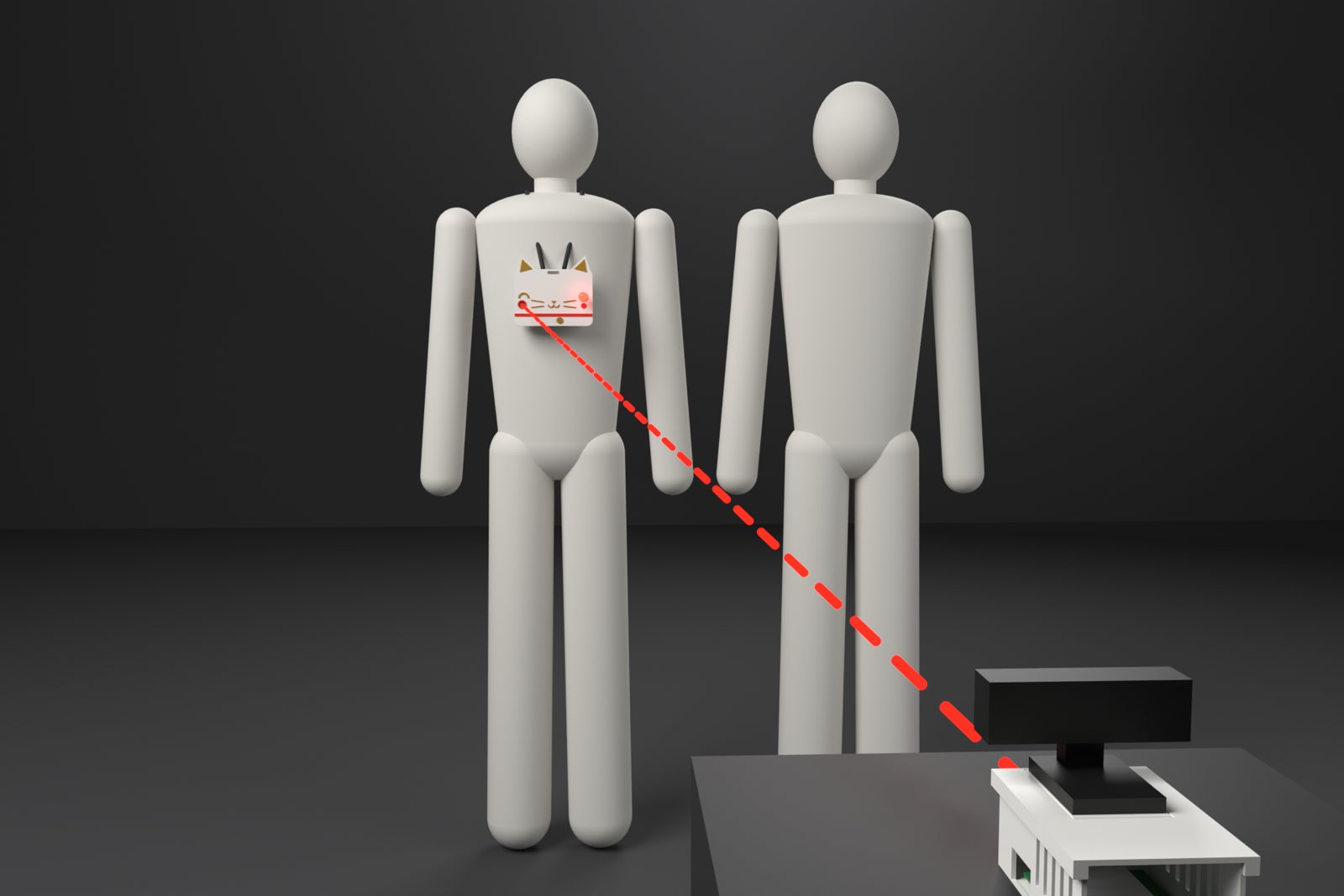
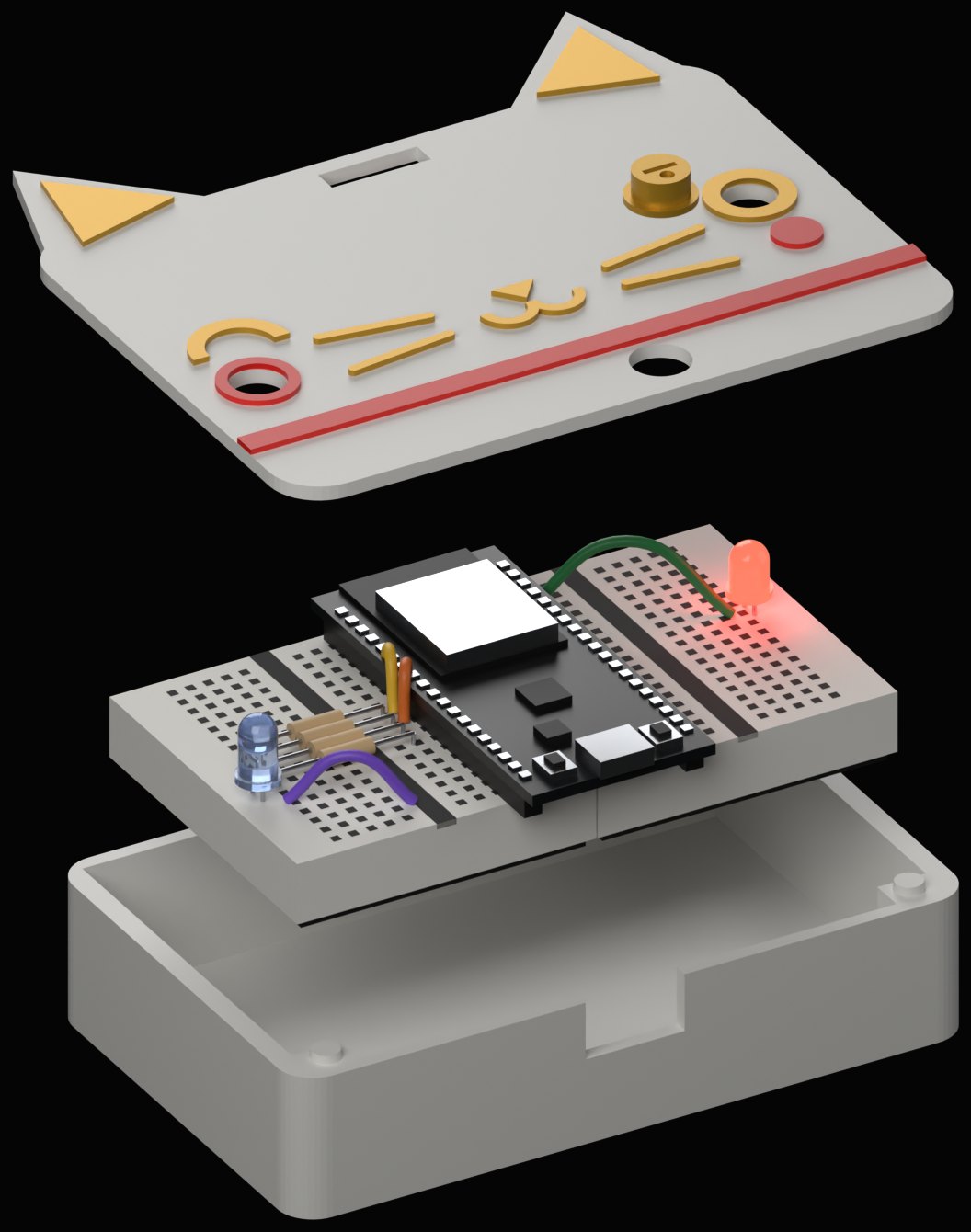
- The badge sends two signals. Over Bluetooth it says a tag is nearby. With an infrared light it blinks a pattern that marks the person wearing it.
- The camera unit has two cameras. One films the room. The other sits behind a dark filter and sees little except that light.
- The camera finds the person the light is on and paints them solid black.
- The video runs 2.5 seconds late, so the erase also covers the moment before the badge was read. Nothing unerased is saved or sent.
Try the rules
These pictures are drawn by computer, not filmed. The person on the left wears the badge.
Limits
- Only a camera that runs this software obeys the badge. It works like a rule of the road: it matters once camera makers agree to follow it, or a law says they must.
- The camera has to see the badge's light. In our daylight test it matched the badge out to 4 metres. Past that, or with your back turned, it hides everyone in view.
- It hides who you are, not what you do. Your outline and your movements stay in the video.
- The badge has no serial number. Its pattern and its radio address change every five minutes, so it cannot be used to follow you.